
how biological inputs work
What we mean by "soil health"
Healthy soil is the foundation of productive agriculture and one of the most biologically active ecosystems on Earth. Far more than dirt, it is a living system composed of minerals, organic matter, water, air, plant roots, and billions of organisms working together.
When people talk about soil health, they usually mean how well that system continues to support plant growth, nutrient cycling and water movement over time, not just the yield from a single season.
In practice, soil health is usually considered across three connected areas:
Physical structure: how well the soil holds and moves water, allows air to circulate and gives roots space to grow.
Chemical balance: factors such as pH, salinity and whether nutrients are present in forms the crop can access.
Biological activity: the community of bacteria, fungi, earthworms and other organisms involved in breaking down organic material, cycling nutrients and interacting with plant roots.
Healthy soil depends on how these components work together. Even when soil contains of sufficient nutrients on paper, but still limit plant growth if compaction, poor drainage or other root-zone conditions prevent the crop from using them.

What is happening below the surface
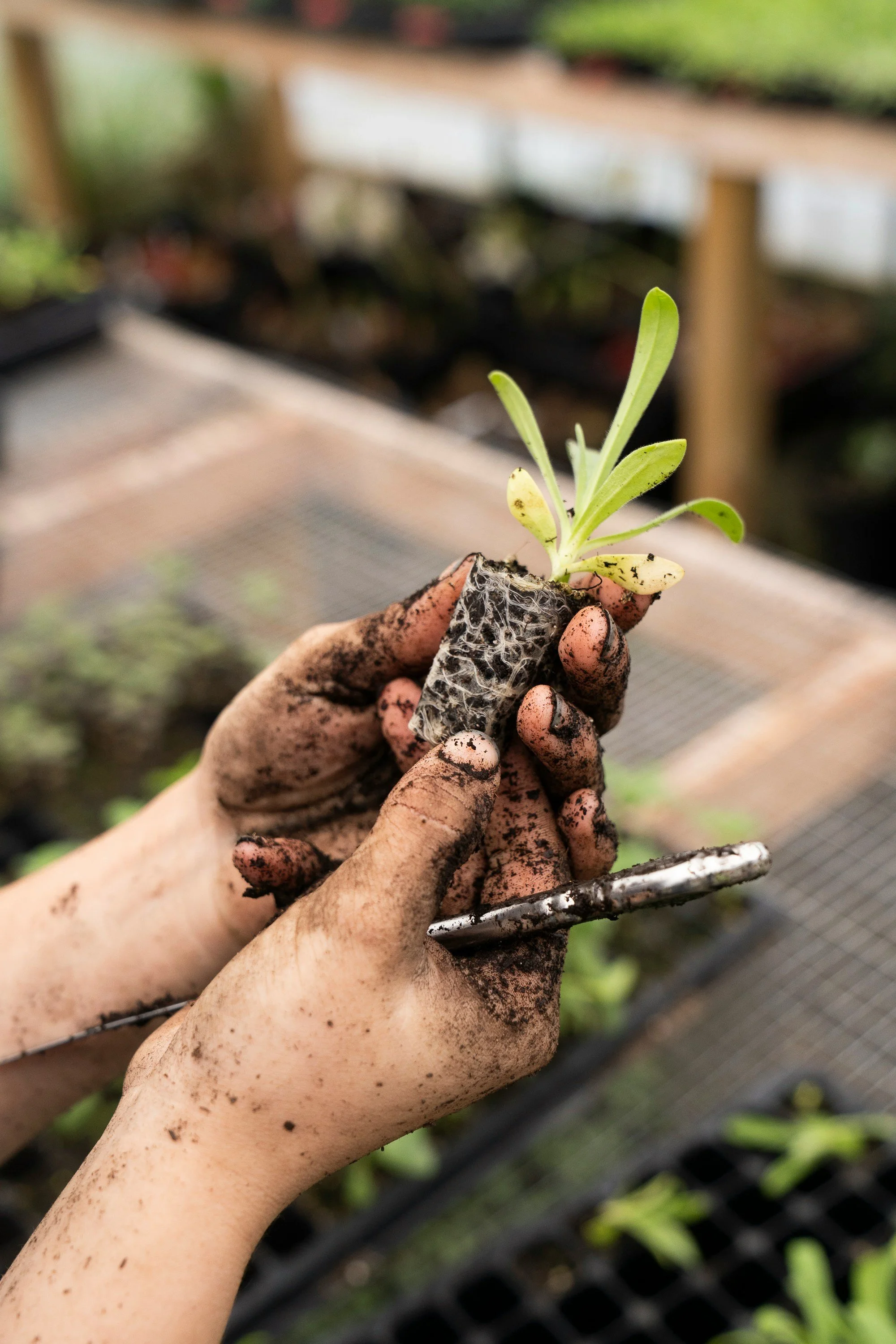
Soil biology drives much of what keeps a growing system productive. The living community including the tiny microbes to earthworms, break down organic material, cycle nutrients and shape the structure around plant roots, some form direct relationships with plants, while others compete with or suppress organisms that cause disease.
More microbial activity isn't automatically better, and not every microorganism is useful. What matters is which organisms are present, in what proportion, what they're doing, and whether conditions let them function.
Organic matter, soil structure, earthworm numbers and microbial activity all give useful signals about what's happening below the surface but no single measure tells the whole story.
Where biological inputs fit in
"Biological inputs" is a broad term. It can include agricultural products that use naturally derived components or living organisms to improve plant nutrition, help crops respond to stress, or protect them against pests and diseases.
One important group within biological inputs is microbial bioproducts, which use beneficial microorganisms to deliver these functions through products such as biofertilisers, biostimulants and biological crop-protection products.

Biofertilisers contain microorganisms that supply nutrients or help make nutrients more available to the crop. Depending on the organism, they may fix nitrogen, release or mobilise nutrients already present in the soil, or help plants access those nutrients more effectively. Unlike a conventional fertiliser, their value doesn't come from the amount of nutrients in the product, it depends on the microorganisms staying viable, establishing at the right place, at right time and doing their job.

Micobial Biostimulants are intended to improve how a plant uses nutrients or responds to its growing environment to challenges such as drought, heat, salinity, or nutrient limitations. In the EU, a plant biostimulant has a formal legal definition: a product that stimulates plant-nutrition processes independently of its own nutrient content, with intended effects that may include improved nutrient-use efficiency, greater tolerance to environmental stress, improved crop-quality traits, or better nutrient availability around the roots. Not every country regulates them this precisely: some, like New Zealand, exempt biostimulants from formal product registration provided certain conditions are met; others, including Great Britain and Australia, don't yet treat them as a distinct regulatory category at all.

Biological crop protection (biocontrol) products help protect crops against pests and disease using biological organisms or biologically derived materials. The products most relevant here are microbial biocontrols, those containing bacteria or fungi intended to protect the crop. Because their primary purpose is crop protection, this is the one area where the regulatory picture is fairly consistent globally, biological crop-protection products generally must usually be registered or authorised by the relevant regulator before they can be sold or used.
The boundaries between these categories aren't always as clear as the labels suggest. The same microorganism, or different strains of the same genuses/species, can be used for nutrition, stress tolerance or disease control. What separates them is often less about what's inside the product than what it's intended and authorised to do: one marketed for nutrient-use efficiency is generally treated as a biostimulant, one claiming to control a pathogen falls under plant-protection rules though exactly where that line sits and how formally it's policed, still varies by country.
For growers, the more practical question is simpler: what is the product supposed to do, and under what conditions is it likely to work?
Why more growers are turning to biological inputs
The reasons more growers are trying biological inputs are ultimately commercial.
Used well, biofertilisers and biostimulants can help a crop use available nutrients more efficiently, support root development and crop quality, or maintain performance under heat, drought, salinity or other stress, getting more from an existing nutrition programme, cutting avoidable nutrient losses, or adding resilience when conditions are unpredictable. They may also reduce exposure to rising or volatile input costs. This rarely means replacing conventional fertilisers outright; the more realistic opportunity is often using biological inputs alongside existing practice to improve the efficiency and return of the whole programme.
There's also a regulatory push in this direction and while the specifics differ by country, the general trend is similar: growers are increasingly expected to account for how nutrients are used and where they end up. The EU's Farm to Fork Strategy targets a 50% cut in nutrient losses and a 20% reduction in overall fertiliser use by 2030, building on the long-standing Nitrates Directive, which already requires farm-by-farm fertiliser plans in nitrate-vulnerable zones. England's Farming Rules for Water require fertiliser and manure applications to be planned around soil and crop need; In Australia regulations require sugarcane growers to work within a farm nitrogen and phosphorus budget; and New Zealand's freshwater regulations are driving similar reductions in nutrient loss to waterways. Products that reliably improve nutrient-use efficiency can help growers respond to that shift by supplement existing practices to reduce reliance on them.
The commercial case isn't that a product is "biological" it's whether it delivers a repeatable benefit, through yield, quality, efficiency, resilience or risk reduction, that outweighs the cost and effort of using it.
Why results vary so much in practice
The same biological product can perform differently from one farm, or even one crop cycle, to the next. For live microbial products to work, the organisms need to survive production and storage, stay viable through preparation and application, reach the right part of the plant or root zone, survive, establish and then function within the biology already at work in that soil.
Results can be influenced by:
Microbial strains and formulations
Storage conditions and product age
Water quality and mixing practices
Application method, dosage and timing
Soil temperature, moisture, oxygen and pH
Soil organic matter and nutrient availability
Existing microbial communities
Crop variety and root-zone conditions
Compatibility with other products and management practices
Research on mycorrhizal fungi has found growth responses to inoculation ranging from a 12% reduction to a 40% increase across fields, with the soil's existing biology one of the strongest predictors of whether an introduced organism delivers a benefit. Biocontrol research shows a similar pattern, temperature, pH, timing and interactions with other microorganisms can all shift how much disease control a product actually achieves. This variability is one of the biggest barriers to wider adoption.
A good microbe is not enough. A successful microbial product needs to survive the journey, establish itself in the crop environment and deliver a consistent benefit under real farming conditions.
our focus
Nodiculture is exploring practical new ways to improve how live microbial biofertilisers, biostimulants and biological crop-protection products are delivered and applied.
We aim to bridge the gap between a product's biological potential and what actually happens when it's used in the real world. We want to understand:
How products are currently stored, prepared and applied
Where performance is consistent, and where it varies
Which practical constraints affect their use
What growers need to see before adopting or expanding their use
How delivery could become more consistent, effective and practical
We're speaking with growers, farm managers, agronomists, advisers and agricultural input specialists to make sure this work is built around the realities of commercial growing.
Share your experience
We'd like to hear from you whether you currently use biological products, have trialled them in the past, or have decided they're not right for your operation. Your experience will help us understand where current approaches work, where they fall short, and what a better approach would need to deliver.
Or get in touch to register your interest in future research, grower interviews and potential future trials.